I planted a few Christmas lima beans back in March (see part 1). After four months of growth, the lima beans are ready to harvest!
I am so glad the plants took to the outside environment and new cedar planter that Ian built. I was concerned at first because the lima bean plants were kind of fragile and not wrapping around the wire cage on their own. I had to wrap the new growth around the cage every day.
Now the plants are big and strong, and do perfectly fine without help. It’s amazing how much the vines grow within one day.

Not only did they reach the top of the wire cage, but now they spill over the top. The vines stretch out to the side, seeking something new to cling to.
For a while I criss-crossed the vines around and through the cage in an effort to cover more surface area. Ever since the vines reached the top though, they cling to each other now.
Look how the vines braid together.

You’d think the vines would strangle each other, but they seem okay. There are new leaves and fresh growth every day.
In the beginning I watered the plants with a watering can. These days I use the backyard hose. The plants are big and need a lot of water.
Here are the white and yellowish flowers that began to appear. After pollination, the flowers grow a tiny adorable bean pod in the middle.

After a couple of weeks, the pods grew to a nice size. Yes, very bean-like.


I noticed a neat thing. When you hold the pods to the sunlight the outer shell looks translucent, and you can see the shadows of beans growing inside. If you look close, you can also see the veins… or maybe plant cells? So cool.


These pods appeared around late June. We let them grow for a month before harvesting. I read that harvesting the pods encourages the plant to flower more, thus leading to more pods in the season.

Our first harvest. We pulled 14 lima bean pods from the plants. A zucchini plant also shares the container… we were shocked to find a giant zucchini hiding in the back!
We used compost as the main soil in this planter. I think the veggies really liked that.

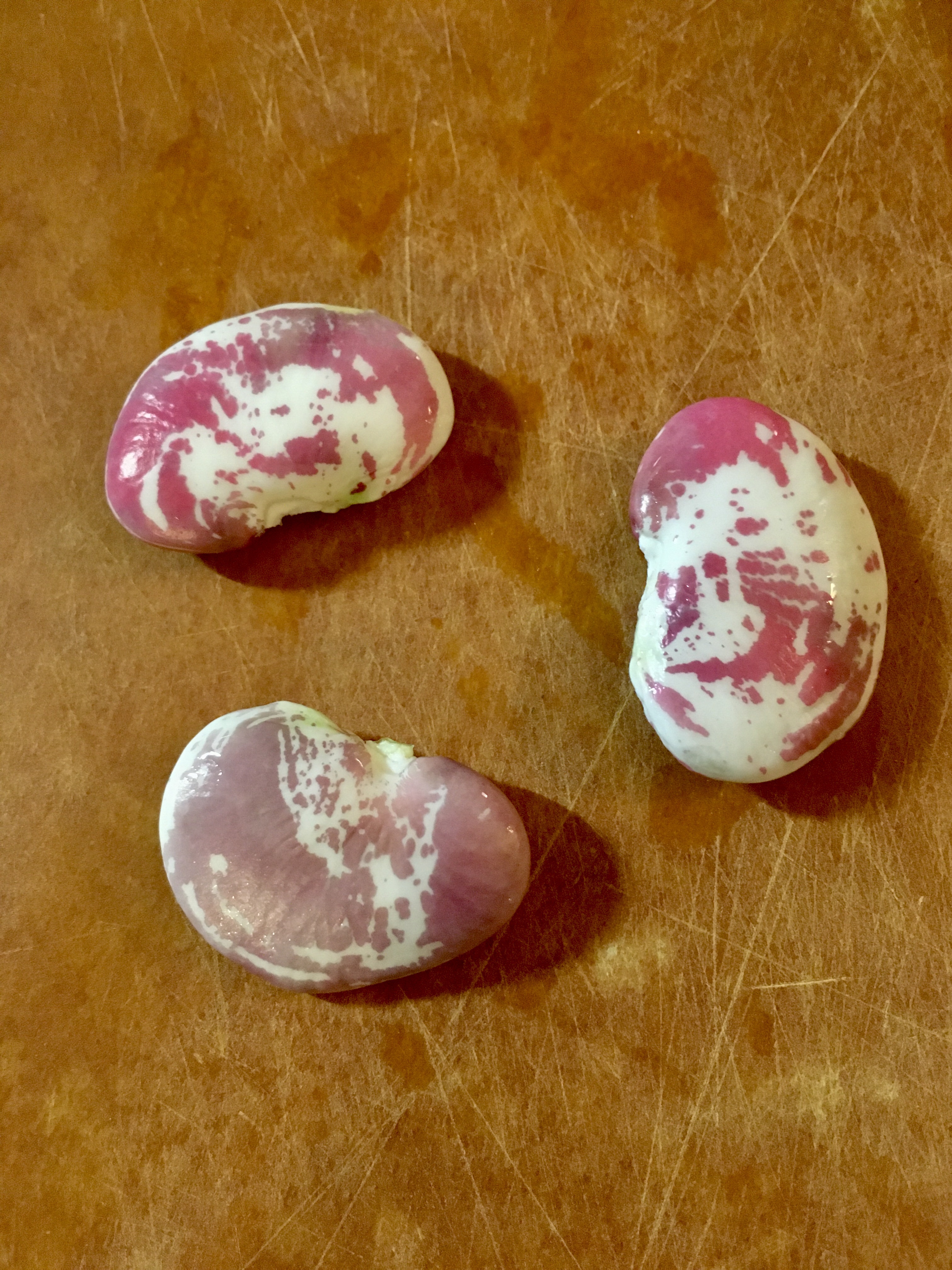
After opening the pod shell, we see the beautiful colors of the Christmas lima bean. The beans are a large size, with white and pink speckles.
The colors are paler than the original beans I planted, which is interesting.
Here are the beans lined up.

The older beans have more color. I think we pulled the small beans too early. They are too young. We need to figure out the best time to pull them.
Ian claims the pods were turning brown and dry though, like they were done. So who knows… maybe holding up each pod to the sunlight would help to check the size, or maybe they were just bad pods.
I’m sure you can cook the beans immediately, but we left the beans to dry on the kitchen counter for a few days. Mostly because we forgot about them.
A few days later, the color darkened to a deep maroon. This is the color I recognize from the original beans that were planted! So exposing the beans to air and letting them dry a few days made the difference.

We researched bean recipes. A lot of people boil Christmas lima beans in a pot and add sliced onions and bacon. We did something similar, but used a vegetarian substitute for the bacon. (We had these lunch meat deli slices made of tempeh in the fridge. So we used that. Upon further reflection, I should have added liquid smoke seasoning.)
They say Christmas lima beans have a unique hazelnut flavor. I could taste a little bit of nutty sweetness with the first bite, but it wasn’t that strong.
In the end, the beans simply taste like… beans. Maybe the flavor would be stronger if we harvested more mature beans, but we shall see.
I hope to grow more pods this summer. My plan is to save a few beans for next year to plant again.
We’ll need a garden area, but I already have some ideas for improving the growing process. A video I saw online used strings and staked them to the ground, with the top part tied to a caged roof trellis. The vines have an easier time climbing the string, then form a canopy on the trellis. That idea would be great to experiment with next time.
It’s better to plant the beans later in season, closer to May when it’s warm outside, instead of cold March like we did here.
All in all, this first year of lima bean-growing was a good learning experience. I’m happy with the results.
Leave a Reply